Soundproof Windows Without Replacement: Effective DIY Solutions
Living with noisy windows can feel like trying to hold a conversation inside a drum, and the idea of a full window replacement often seems like the only escape route.
However, the good news is that you absolutely can soundproof windows without replacing them, using a range of targeted strategies that attack noise at its entry points.
This approach is ideal for renters, historic homes, or anyone looking to save money while still achieving a noticeably quieter indoor environment.


By focusing on sealing air gaps, adding mass, and disrupting sound paths, you can transform your windows from noise funnels into effective barriers without the structural commitment or cost of new frames.
Sealing Air Leaks and Gaps
The majority of window noise sneaks in through tiny cracks and poorly sealed joints rather than through the glass itself.


Addressing these air leaks is the single most cost-effective step because sound travels effortlessly through gaps where air can pass.
Weatherstripping Applications
Adhesive foam tape, V-seal weatherstripping, and brush seals can be applied to the window sash and frame to fill voids when the window is closed.
These materials compress when the window shuts, creating a tight barrier that blocks both air drafts and airborne sound waves.


Caulking Exterior Joints
Over time, exterior caulk around the window frame can shrink, crack, or wash away, leaving channels for noise to enter.
Refreshing this caulking with a high-quality, paintable silicone or acrylic caulk seals the perimeter where the frame meets the wall, preventing sound leakage.
Adding Mass and Surface Density
Sound waves lose energy when they encounter dense, heavy materials, making mass a primary weapon in soundproofing efforts.


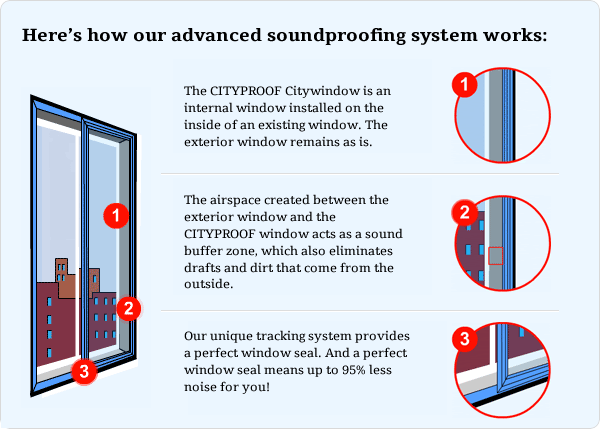


Increasing the surface density of your existing windows helps to block and absorb sound energy before it has a chance to vibrate the glass and frame.
Acoustic Window Film Applications
Specialized acoustic window films are applied directly to the glass, adding a thin but significant layer of mass that dampens vibration.
While not as effective as heavy barriers, these films are virtually invisible and ideal for situations where aesthetics or light transmission are important.
Interior Window Inserts and Panels
Fitting snugly inside the existing window frame, acrylic or glass inserts create a secondary air gap that interrupts sound transmission.
These removable panels act as a separate barrier, and when combined with a tight seal, they can dramatically reduce noise without replacing the original window.
Utilizing Window Treatments and Barriers
Heavy curtains and specialized window coverings add another layer of mass and absorption, tackling sound that has already entered the room.
Choosing the right treatment can soften reflections and reduce the overall noise floor, making the space feel much quieter.
Heavy Drapes and Acoustic Curtains
Drapes made with multiple layers of dense fabric and a mass-loaded vinyl backing absorb sound energy rather than letting it bounce around the room.
For maximum impact, ensure the curtains extend well beyond the window frame and reach the floor to minimize gaps at the sides and bottom.
Exterior Awnings and Shutters
Installing exterior awnings or window shutters creates a physical air gap between the outdoor noise source and the window glass.
This additional distance and the mass of the shutter boards dissipate sound energy, resulting in a noticeable reduction in street noise.
Strategic Room Positioning and Layout
Sometimes the most effective soundproofing approach involves working with your home's existing layout rather than fighting against it.
By positioning quieter activities away from the noisiest windows, you can minimize exposure without any modification to the glass or frames.
Furniture as Sound Buffers
Bookshelves, wardrobes, and heavy cabinetry placed against shared party walls or near windows act as substantial sound barriers.
These dense objects absorb and block noise, preventing it from traveling directly from the window into your primary living or working areas.
Rearranging Living Spaces
If your bedroom requires silence for sleep and your study demands concentration, avoid placing them directly opposite the loudest windows.
Relocating these key areas to interior walls can provide an immediate, low-cost improvement in perceived quietness.
Exploring these methods allows you to tailor your approach based on budget, rental restrictions, and the specific noise challenges you face.
With a combination of sealing, mass, and layout adjustments, you can create a noticeably calmer home environment while preserving your existing windows.
Related Articles

DIY Soundproof Windows: Easy & Effective Home Solutions
Many people assume that thick walls are the only thing standing between their peace and the noisy world outside, but they often overlook the weakest link in...

Soundproof Walls Without Removing Drywall: Effective Solutions
Living with noisy walls can feel like trying to hold a conversation in a crowded train station, where every word from the next room punches through with...

How to Soundproof an Office from Outside Noise: Effective Tips & Solutions
Office noise from outside can sabotage focus, increase stress, and reduce the quality of your workday. Whether you work from home or in a traditional building...

Can You Soundproof a Drop Ceiling: Effective Tips and Solutions
Many homeowners and building managers dealing with noisy overhead spaces find themselves asking whether you can soundproof a drop ceiling effectively. A...

What Can I Use to Soundproof a Door: Cheap & Effective Solutions
Living with a hollow, noisy door can be incredibly frustrating, especially if you work from home, share walls with loud neighbors, or simply value a quiet...

How to Soundproof Walls: Effective DIY Solutions for Reducing Noise
Learning how to make walls soundproof can transform a noisy home office into a sanctuary of focus or give your bedroom the quiet it deserves after a long day...