Mastering Simple Clothing Folds: A Step-by-Step Drawing Guide
Learning how to draw simple clothing folds is one of the most rewarding skills for any artist who wants to bring life and realism to their figures. Every time a garment moves, it reacts to gravity, wind, and the form of the body, and your job as a drawer is to translate that physics into line and shadow. Instead of seeing folds as random messes, you can learn to see them as structured pathways that guide the eye and describe volume. With a few core principles and consistent practice, sketching fabric will stop being a source of frustration and become a powerful tool for storytelling.
Before you dive into complex draped costumes, it helps to understand that most folds follow predictable patterns based on tension and weight. When fabric hangs from a single point, like a sleeve or a neckline, gravity pulls it down, creating long, graceful curves that gather at anchor points. When fabric lies flat against a surface, such as a table or a leg, it forms more angular creases that compress the material into tighter ridges. Recognizing these two basic families—hanging and pressing—gives you a mental framework for quickly deciding how a piece of clothing will behave.
Observing Real Fabric to Improve Your Drawings
The fastest way to learn how to draw simple clothing folds is to look at actual clothes in different lighting conditions. Hang a jacket on a hook, sit in a chair, or watch how your shirt behaves when you raise your arms, and notice where the fabric stretches, where it compresses, and where shadows pool. These real world references train your eye to see the rhythm of overlapping curves and the logic behind seemingly random wrinkles.


Lighting plays a crucial role in defining the structure of folds, because highlights cling to the tops of bumps while shadows settle into the valleys. If you imagine a ray of light running along the edge of a fold, the side facing the light will be bright and barely textured, while the underside will darken and reveal a series of stacked, crescent shapes. By simplifying these tonal shifts into a few gradations, you can suggest complex fabric with just a handful of lines and shading strokes.
Using Simple Shapes as Building Blocks
Beginners often try to draw every tiny wrinkle, which leads to messy, chaotic results. A better approach is to start with simple shapes such as cylinders, spheres, and cones, then imagine how a flat piece of fabric would wrap around them. Think of a sleeve as a rolling cylinder, and picture how the fabric would bend and twist as the arm moves, forming new compression lines where the material overlaps itself.


As you practice, challenge yourself to break a complex skirt or cloak into triangles and rectangles suspended in space. Each triangle can represent a broad fold, and by connecting them with contour lines that follow the surface of the body, you create a sense of depth without getting lost in detail. This method of simplifying clothing into geometry is the backbone of how to draw simple clothing folds that still feel dynamic and believable.
Capturing Flow and Movement
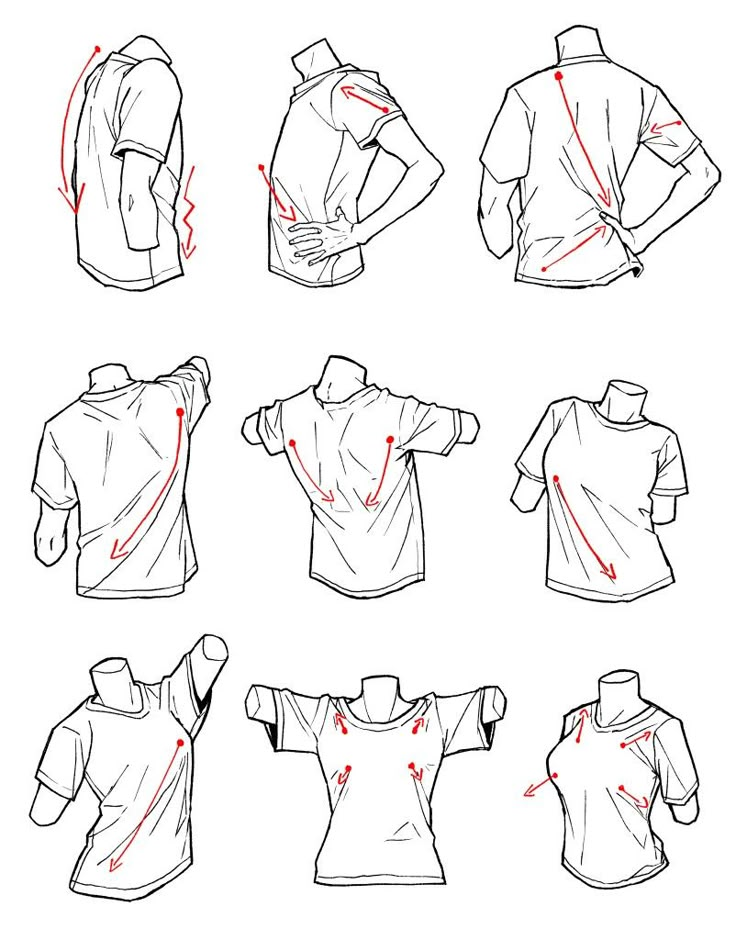
Even the simplest folds should tell a story about where the body is going. If a character is walking forward, the front of the pants will stretch slightly while the back of the coat trails behind, creating longer, more fluid curves that echo the stride. Arrows and gesture lines drawn lightly underneath your sketch can help you map out this directional energy before you commit to the final outlines.
Another useful exercise is to trace over a photograph of folded fabric with your finger or a stylus, paying attention to how one fold leads to the next in a continuous chain. This kinesthetic memory trains your hand to follow graceful, connected paths rather than short, broken strokes. Over time, you will find it easier to invent natural looking folds on the page because your hand already knows the rhythm of cloth in motion.


Applying Folds to Common Clothing Types
Once you understand the basics of tension and weight, you can apply them to specific garments and learn how to draw simple clothing folds for shirts, pants, dresses, and jackets. The key is to identify the primary forces acting on each piece, such as the pull of gravity on a hem or the compression of fabric where the arm bends. Thinking in terms of forces rather than random wrinkles makes the drawing process more intuitive.
For example, a loose t shirt tends to form large, soft gathers around the chest and sleeves, while a fitted t shirt clings to the shoulders and armpits with sharper, more localized creases. By exaggerating these differences in your sketches, you can instantly communicate whether a character is wearing something casual and relaxed or snug and athletic.
Sketching Pants and Legs with Confidence
Pants and leggings provide a fantastic starting point for practicing fabric folds, because the shapes are relatively predictable and the folds are easy to break down into simple lines. When a character stands with their weight evenly distributed, the front of the thigh usually stretches slightly while the back of the knee bends, creating a small pocket of compressed fabric known as a popliteal fold.




As the leg moves, these folds change dramatically, stretching into long diagonal patterns when the stride is extended or bunching into tighter curves when the knee is sharply bent. To capture this, focus on the silhouette of the leg first, then add a few bold fold lines that follow the direction of the movement. Remember that the inside of the leg usually has darker, denser shadows, while the outside remains lighter and smoother.
Bringing Jackets and Coats to Life
Jackets and coats introduce more complexity because they often involve multiple layers of fabric, collars, and hems that interact with one another. The shoulders and armholes are hinge points where fabric can pivot, generating clusters of folds that fan out like the spokes of a wheel. When drawing these areas, think of the clothing as a series of panels that rotate around bony landmarks rather than a single sheet of paper.
Heavier materials like wool or denim hold their shape and create bolder, crisper folds, while lightweight scarves and cloaks ripple with softer, more irregular curves. By varying the thickness of your line weight and the density of your shading, you can suggest different fabrics without needing to draw every thread. This flexibility is especially useful when you are working quickly on design sketches or storyboards.
Refining Your Technique with Consistent Practice
Developing a strong sense for how fabric behaves takes time, but you can accelerate your progress by studying reference images, slowing down your drawing process, and analyzing what you see. Try keeping a small sketchbook dedicated to folds, where you copy photos of jackets, dresses, and scarves until you can recreate their essential patterns from memory. This deliberate practice builds a visual library that you can draw upon when designing characters from imagination.
Experimenting with different tools, such as brush pens, graphite pencils, or digital brushes, will also expand your ability to render texture and depth. A soft pencil can blend into velvety shadows, while a fine liner can carve in sharp, decisive seams that make the folds feel more structured. Discover which tools match your personal style, and let them encourage you to explore new ways of interpreting clothing on the page.
As you continue to refine your skills, remember that even the most complex costumes are just combinations of simple principles you have already learned about tension, weight, and movement. Each new garment you study adds another layer of intuition to your drawing instincts, making it easier to invent clothing that feels alive and authentic. Allow your curiosity about how fabric interacts with the human body to drive your practice, and you will find that drawing realistic characters becomes a natural extension of your observation.
Approach each drawing session as a chance to solve a visual puzzle, where the clues are shadows, highlights, and the subtle overlaps that reveal depth. Over time, the mystery of how to draw simple clothing folds will transform into a confident, almost intuitive understanding of how cloth behaves in the real world. Let that understanding guide your hand as you fill your sketchbooks with characters whose garments seem to move, breathe, and respond to the world around them, and keep challenging yourself to notice one new detail about fabric every time you draw.
Related Articles

Mastering Simple Clothing Sketches: A Step-by-Step Guide
Learning how to draw simple clothes is a fantastic way to bring your fashion ideas and character concepts to life without getting overwhelmed by complex...

Mastering Simple Pencil Sketches: A Step-by-Step Guide
Learning how to draw simple pencil sketches is one of the most rewarding creative journeys you can begin, whether you are a total beginner or someone...

How to Draw Simple Shells: Easy Step-by-Step Guide
Embarking on a creative journey to draw simple shells can be a rewarding experience, allowing you to explore your artistic side while learning a new skill...

How to Draw a Simple Sea Shell: Easy Step-by-Step Guide
Have you ever admired the intricate patterns and delicate curves of a seashell, wondering how to capture that beauty on paper? Drawing a simple seashell might...

Simple Lamp Drawing Tutorial: Easy Step-by-Step Guide
Learning how to create a lamp drawing simple is a rewarding creative exercise that combines clean lines with soft shading. This guide walks you through each...

How to Draw a Simple Garden: Easy Step-by-Step Guide
Transforming a blank canvas into a vibrant, lush garden is an incredibly rewarding endeavor. Whether you're a seasoned gardener or just starting your green...