Is Dot Painting Traditional Origins Techniques And Modern Appeal
The question of whether dot painting is traditional opens a window into the deep cultural roots of Indigenous Australian art, where a simple mark carries the weight of thousands of years of knowledge. This ancient practice involves applying paint in a series of intricate, closely placed dots to form complex patterns, images, and stories that connect the physical world to the Dreamtime. Understanding the traditional context of these techniques reveals that what may appear purely decorative is, in fact, a sophisticated visual language.
To address the core question directly, yes, dot painting is profoundly traditional, but its specific application and style are relatively recent evolutions within an ancient artistic lineage. The technique itself is a modern innovation applied to a very old framework of symbolic representation and cultural transmission. To label it simply as traditional or modern is to miss the dynamic nature of living Indigenous cultures that continue to adapt while honoring ancestral wisdom.
The Deep Roots of Indigenous Art
Indigenous Australian art is one of the oldest continuous artistic traditions on the planet, with evidence of painting and engraving dating back tens of thousands of years. For millennia, artists have used natural pigments on rock walls, the human body, and organic materials to depict the landscape, ancestral beings, and the laws that govern existence. This long history establishes a deep reservoir of meaning that contemporary artists draw upon, regardless of the specific technique they employ.


Before the introduction of modern acrylic paints, artists used natural ochres, clays, and charcoal, applying these materials with fingers, sticks, or brushes made from plant fiber. The shift to synthetic paints and the iconic dot style emerged in the mid-20th century, yet the symbolic content and the connection to Country remain firmly rooted in the same Dreamtime narratives that have guided cultural expression for generations.
Symbolism and Story
At the heart of traditional art, whether dot painting or another style, is the transmission of Tjukurrpa (the Dreamtime). Every element in a painting—the placement of dots, the clustering of colors, the shape of the lines—refers to specific locations, ancestors, or events from the creation period. These stories are not mere mythology; they are the laws and knowledge systems that dictate kinship, land management, and moral conduct within the community.
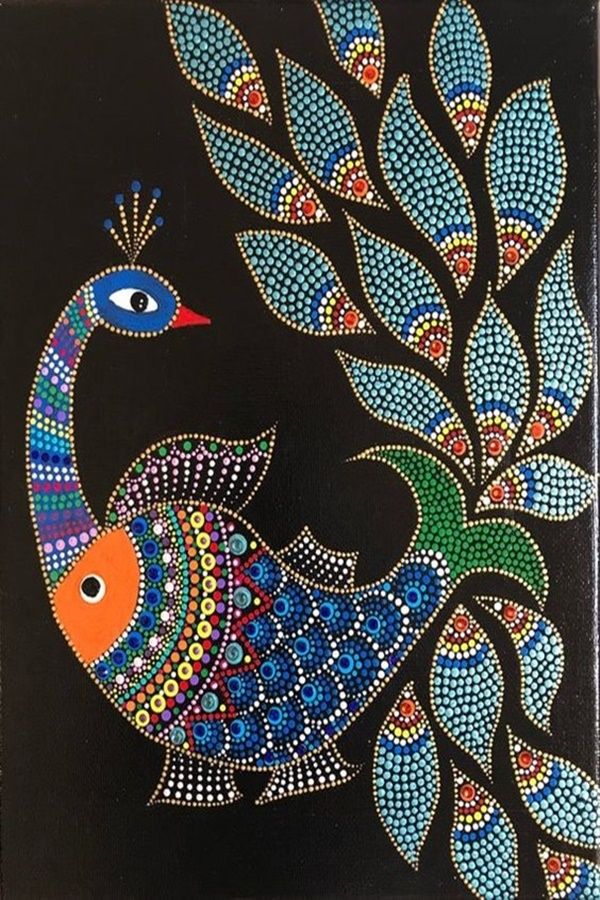


The dots act as a kind of visual shorthand, a veil that protects the sacred knowledge contained within the artwork from uninitiated eyes. While the designs may look abstract to an outsider, they are meticulously planned maps of the artist’s spiritual and physical world. This layering of meaning is a defining characteristic of the tradition, ensuring that cultural knowledge is passed down through carefully regulated channels.
Ceremonial Origins
Many of the designs used in dot painting, particularly the dense patterns of smaller dots, originated from ceremonial body painting and sand drawing. During important rituals, initiates would have their bodies painted with intricate designs that represented their totem, their clan, and their role within the community. Similarly, sand drawings were created and then immediately ritually erased, emphasizing the transient and sacred nature of the moment.
When these motifs were translated onto canvas, the dots served a dual purpose: they were aesthetically striking, and they allowed the artist to create a permanent record of ephemeral ceremonial designs. This connection to ritual practice underscores that dot painting is not merely an artistic choice but a continuation of a deeply spiritual tradition adapted to a new medium.


Evolution and Cultural Expression
The development of the recognizable dot technique is often attributed to the Papunya Tula artists of the Western Desert in the 1970s. Facing the challenge of representing sacred stories on a flat surface for a wider audience, elders and artists devised the dotting technique as a way to abstract the imagery while maintaining its sanctity. This innovation allowed them to share aspects of their culture with the outside world without fully exposing the esoteric knowledge reserved for initiated members.
This evolution demonstrates that Indigenous art has always been adaptable, responding to new materials and contexts while retaining its essential spiritual core. The dot style is therefore both a practical solution and a powerful artistic statement, asserting the presence and continuity of culture in the modern world. It is a testament to the resilience of a people and their determination to keep their stories alive.
Regional Variations
While dot painting is widely associated with Central Australian artists, it is important to note that style and technique vary significantly across the continent. In the Kimberley region, for example, artists might favor bold outlines and cross-hatching, whereas desert artists are renowned for their dense, granular dot work. These variations are not arbitrary; they are linked to specific language groups, ceremonial practices, and environmental contexts.


Understanding these nuances is key to appreciating the tradition. A dot painting from Papunya carries a different historical weight than a piece from the Kimberley, even if both are described as "traditional." The diversity within the art form showcases the richness of hundreds of distinct Australian cultures, each contributing to the broader tapestry of Indigenous expression.
Modern Interpretations
Contemporary Indigenous artists continue to push boundaries, blending traditional dot painting with other styles or using it to address current social and environmental issues. Some artists might use a minimalist approach to dotting, while others layer colors to create stunning three-dimensional effects. This experimentation keeps the tradition vibrant and relevant for new generations of artists and viewers.
However, the heart of these modern explorations remains the connection to ancestry and the land. Even when the subject matter shifts, the underlying cultural framework persists. The dots remain a powerful symbol of the unseen forces that shape the visible world, linking the artist, the artwork, and the viewer to a profound and ongoing narrative.
Looking at a canvas covered in intricate dots, one sees not just a pattern, but a universe of meaning encoded in pigment and intention. The tradition is not static; it breathes and evolves through the hands of those who keep the stories alive, ensuring that the voices of the past continue to resonate in the present and guide the future.
Related Articles

Best Painting Inspiration: Top Ideas & Techniques
Unlocking creativity often begins with a spark of inspiration, and for artists, this frequently comes from the world around us. If you're an aspiring painter...

What Makes a Mid Century Modern Home Design Timeless Appeal
Nestled in the heart of the mid-20th century, a unique architectural movement emerged, one that celebrated simplicity, functionality, and an affinity for...

Stunning School Front Wall Painting Ideas Curb Appeal
Transforming the exterior wall of a school into a vibrant canvas can redefine the identity of an entire campus. School front wall painting ideas offer a...

Mastering Stencils: No Bleed Canvas Painting Techniques
Embarking on a creative journey with stencils and canvas can be an exciting and rewarding experience. However, one common challenge artists face is preventing...

Modern Art Masterpiece for Your Living Room
Modern art painting living room design transforms a standard sitting area into a bold expression of personality and contemporary taste. Instead of hiding...

Two Tone Painting Kitchen Cabinets: Modern DIY Ideas & Inspiration
Transforming your kitchen into a sleek, modern space often starts with a simple yet impactful decision: two-tone painting your kitchen cabinets. This trend...