Master Logical Group Instructions 8085 Aseetraining Guide
When discussing the 8085 microprocessor, a deep dive into its logical group instructions is essential. These instructions form the backbone of the 8085's operation, enabling it to perform a wide array of tasks. Let's explore these instructions, their functions, and how they're grouped for efficient processing.
The 8085 microprocessor uses an 8-bit data bus and has a 16-bit address bus, allowing it to address up to 64KB of memory. Its instruction set is divided into several groups, each serving a unique purpose. Understanding these groups is key to grasping the 8085's capabilities.
Data Transfer Instructions
Data transfer instructions facilitate the movement of data between memory locations and registers. They are crucial for data manipulation and processing.


One such instruction is the Load (LDA) instruction. LDA moves data from memory to a register. For instance, LDA A,16 moves the data stored at memory location 16 into the accumulator (A) register.
Load Instructions
Load instructions transfer data from memory to a register. They include LDA, LDB, LDH, LAX, and others, each moving data to a specific register.


Examples of load instructions include LDA A,16 (Load Accumulator with data from memory location 16) and LDB B,32 (Load B register with data from memory location 32).
Store Instructions
Store instructions, conversely, transfer data from a register to memory. They include STA, STB, STH, and others, each moving data from a specific register to memory.
Examples include STA 16 (Store the data in the Accumulator at memory location 16) and STB 32 (Store the data in the B register at memory location 32).


Arithmetic and Logic Instructions
Arithmetic and logic instructions perform mathematical operations and logical comparisons. They are fundamental to data processing and decision-making.
For example, the Add (ADD) instruction adds the contents of a register to the contents of another register or memory location. ADD A,16 adds the data at memory location 16 to the data in the Accumulator (A) register.
Addition Instructions
Addition instructions perform binary addition. They include ADD, ADI, and ADB, each adding data to a specific register.


Examples include ADD A,16 (Add the data at memory location 16 to the Accumulator) and ADI 10 (Add the immediate value 10 to the Accumulator).
Subtraction Instructions
Subtraction instructions perform binary subtraction. They include SUB, SUI, and SUBB, each subtracting data from a specific register.
Examples include SUB A,16 (Subtract the data at memory location 16 from the Accumulator) and SUI 10 (Subtract the immediate value 10 from the Accumulator).
In conclusion, understanding the logical group instructions of the 8085 microprocessor is vital for anyone working with this processor. These instructions, ranging from data transfer to arithmetic and logic operations, enable the 8085 to execute a wide range of tasks. By mastering these instructions, one can unlock the full potential of the 8085 and build efficient, effective programs.
Related Articles

Master Arithmetic Group Instructions 8085 Turbo Boost Your Assembly Coding Skills
The 8085 microprocessor, introduced by Intel in 1976, is renowned for its innovative design and robust performance. A key aspect of its architecture is the use...

Easy Origami Bookmark Instructions Printable Step by Step Guide
Origami, the ancient Japanese art of paper folding, has captivated people of all ages for centuries. One of the most practical and delightful ways to...

Master How To Fold Roll Towels Like A Pro Quick Guide
Mastering the art of how to fold roll towels transforms a simple bathroom essential into a space saving and hygienic habit. The rolled towel design stands...

Master White Cement Texture Art: Easy DIY Guide
White cement texture art is a rewarding way to turn a simple bag of concrete into striking decorative pieces for your home or garden. Unlike colored cement...

Master ADB List Disabled Packages: Ultimate Guide
When managing Android devices, especially for troubleshooting or deep system analysis, encountering disabled packages is a common scenario. The command adb...
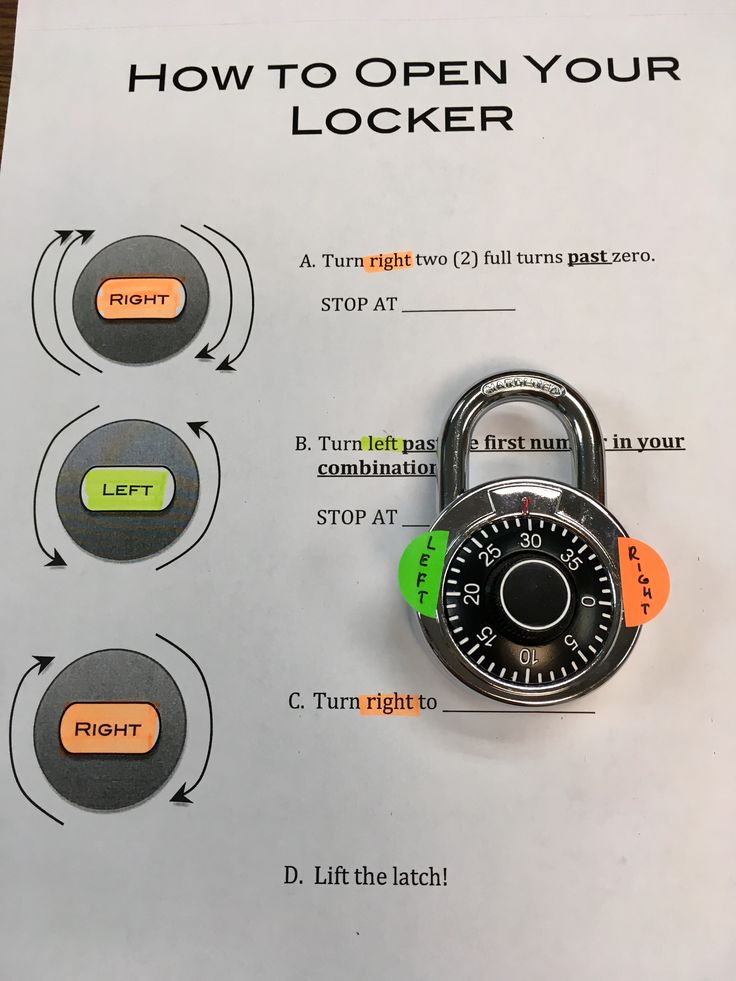
School Locker Lock Instructions: Step-by-Step Guide
Learning how to use a school locker lock correctly can save you time and stress during a busy day. These sturdy metal storage units line the hallways of most...