What Size Beams for a Pergola? Ultimate Guide to Pergola Beam Sizes
Choosing the right size beams for a pergola is the single most important structural decision you will make during the design process. These horizontal members define the character of the structure, carrying the weight of the roof covering while establishing the primary visual lines across your outdoor space. Understanding how to size them correctly ensures your pergola remains safe, durable, and aesthetically pleasing for years to come, whether you are planning a simple garden shade structure or a grand outdoor room.
The dimensions of your beams are dictated by a combination of span length, load requirements, and local building codes, rather than a single universal measurement. A beam that works perfectly for a ten-foot covered patio might fail miserably if used to support a twelve-foot span without additional support. This article will guide you through the key factors that influence beam sizing, helping you make confident decisions for your specific project and avoid common pitfalls that lead to sagging or structural instability over time.
Understanding Structural Loads and Span
The primary technical consideration for beam selection is the span, which is the clear distance between two supporting posts without any intermediate vertical bracing. The longer this distance, the more the beam will bend under weight, which is why larger dimensions are required for wider pergolas. You must account for both the dead load, which includes the weight of the beams, rafters, and any permanent fixtures, and the live load, which covers people, furniture, and environmental factors like snow or heavy rain.


Regional wind and snow loads also play a critical role in determining the required strength of your beams. A pergola in a coastal area prone to hurricanes will need beefier construction to resist uplift forces compared to one in a sheltered inland valley. Consulting your local building department or a structural engineer is the best way to confirm the specific requirements for your property, as they will have the exact wind and precipitation data needed to size your support structure accurately.
Live Load and Snow Calculations
Live load calculations are essential for spaces that will see heavy use, such as a pergola that doubles as an outdoor dining area or lounge zone. Most residential building codes reference a standard live load of 40 pounds per square foot for floors, but pergola roof loads are typically much lower, often around 20 pounds per square foot. However, if you plan to attach a solid roof panel or live beneath tree branches, you must adjust these numbers upward to reflect the increased weight.


In regions that experience significant snowfall, the snow load can easily become the governing factor in your design. A light pergola with open lattice sides might be fine with standard sizing in a dry climate, but the same structure could collapse under the weight of wet, heavy snow without increased beam depth or additional supports. Always research the snow load rating for your specific location to ensure your pergola can handle the weight of winter weather safely.
Deflection Limits and Material Behavior
Even if a beam is strong enough to resist breaking, it can still fail visually and functionally if it deflects, or bends, too much under normal use. Building professionals typically limit deflection to a fraction of the span length, often L/240, meaning a beam spanning eight feet should not bend more than about a third of an inch under load. Exceeding this limit leads to sagging midspan and a structure that feels unstable or springy when walked beneath.
The material you choose will determine how it behaves under stress. Wood beams are generally more forgiving and easier to work with for DIY builders, while steel offers a higher strength-to-weight ratio, allowing for longer spans with slimmer profiles. Regardless of material, ensuring the beam is supported correctly at the ends and connected securely to the posts is vital for controlling deflection and maintaining long-term structural integrity.


Common Beam Sizing Strategies
When designing a pergola, contractors and DIY enthusiasts often rely on standard dimensional lumber sizes to simplify the planning process. For residential projects with moderate spans, a double 2x12 beam is a very common and robust choice for supporting a typical roof structure. This configuration provides substantial depth and width, distributing the weight across a large area and minimizing the risk of bounce or sag over time.
If your pergola has a very short span, perhaps only six to eight feet, you might be able to get away with a single, larger timber or a double 2x10 configuration. Conversely, for spans that exceed ten feet, you will likely need to move to double 2x12s or even consider engineered wood products like LVL (Laminated Veneer Lumber) to achieve the necessary strength without requiring excessively bulky solid wood beams.
Spacing and Doubling Strategies
Sometimes, increasing the number of beams is more practical than increasing the size of a single beam. By reducing the spacing between your main support beams, you effectively shorten the span that each raider must cross, allowing you to use smaller dimensional lumber. For example, spacing joists at 16 inches on center instead of 24 inches can permit the use of 2x8 or 2x10 beams instead of jumping straight to 2x12s.


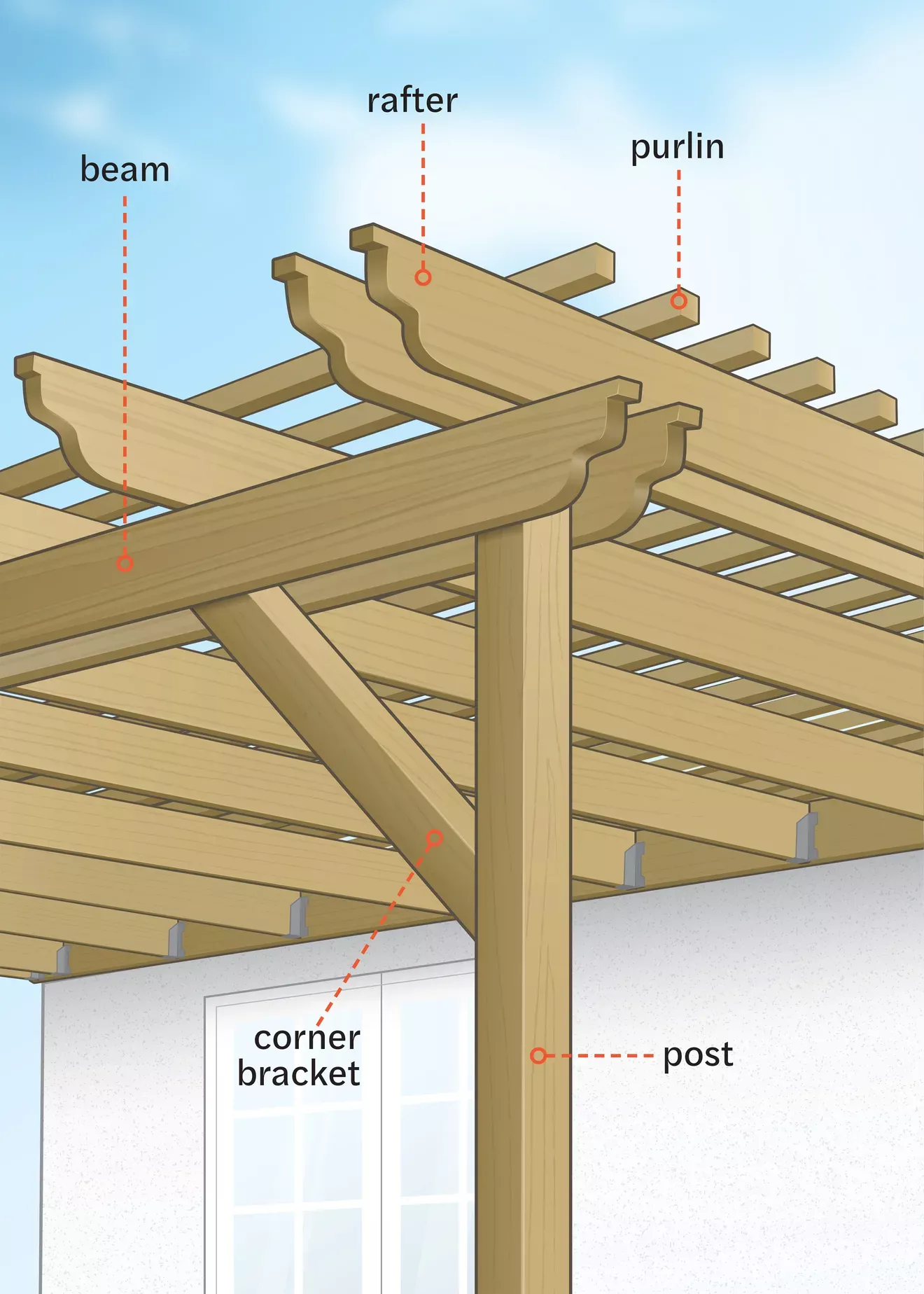


Doubling or tripling beams at specific points, such as over a doorway or where the roof connects to a retaining wall, creates a local reinforcement that handles concentrated stress. This technique allows you to keep the general framework lighter while ensuring that critical junctions are strong enough to handle the intersection of multiple load paths. It is a smart strategy for maintaining both structural integrity and visual appeal in your design.
Engineered Wood and Steel Options
For modern pergola designs or situations where long spans are unavoidable, engineered wood products offer a superior alternative to solid sawn lumber. Products like LVL, I-Joists, and GluLam beams are manufactured to specific, consistent dimensions and strengths, free from the knots and defects that can weaken natural wood. They provide exceptional straightness and load-bearing capacity, often looking cleaner and more contemporary than bulky timber.
Steel beams are another excellent option, particularly for ultra-modern aesthetics or industrial-style outdoor spaces. A steel W-beam or a sturdy rectangular tube can support enormous weights with minimal deflection, allowing for dramatic, wide-open structures. If you choose steel, you will need to factor in additional costs for fireproofing or weatherproofing treatments to prevent rust and ensure longevity against the elements.
Aesthetic Considerations and Final Sizing
While structural integrity is paramount, the visual weight of your beams should complement the overall style of your home and landscape. A massive 6x8 beam might overpower a small cottage garden, while a slender 2x4 pergola could look flimsy on a large, grand estate. The goal is to find a balance where the beams feel substantial enough to convey durability and purpose without appearing out of scale.
Before placing your final order or cutting the first board, it is highly recommended to create a detailed drawing or use structural engineering software to model your pergola. This allows you to verify that your chosen beam sizes work together correctly and meet safety standards. When in doubt, consulting a licensed structural engineer is a wise investment that protects your home, your family, and your financial commitment to this valuable outdoor addition.
Taking the time to research and calculate the correct beam sizes upfront saves you from the frustration of future repairs or, worse, a dangerous structural failure down the line. Every decision you make today regarding the skeleton of your pergola contributes to the overall safety, comfort, and beauty of your outdoor living environment. By carefully evaluating your specific project parameters, you can proceed with confidence, knowing that your pergola will stand strong and look magnificent for years to come, ready to host countless memories under the open sky.
Related Articles
What Size Are Pergola Beams Ultimate Guide To Pergola Beam Dimensions
Choosing the right size for pergola beams is one of the most critical decisions you will make during your outdoor construction project, as these horizontal...

What Is The Best Size For A Pergola Ultimate Guide
Choosing the right dimensions for your outdoor structure is the most important decision you will make when planning a new backyard feature. A pergola that is...
What Size Should Pergola Beams Be: Sizing Guide for Perfect Patio Structure
Choosing the right size for pergola beams is one of the most critical decisions you will make during your outdoor construction project, as it directly impacts...

What Is a Medium Size Bedroom: The Ultimate Guide
When it comes to home design and planning, bedroom size is a crucial factor to consider. But what exactly constitutes a medium-sized bedroom? Let's delve into...

What Size Should Pergola Posts Be Sizing Guide For Durable Outdoor Structures
Choosing the right size for pergola posts is one of the most critical decisions you will make during the planning phase of your outdoor structure, as these...

What Are the Dimensions of a Nesting Box for Chickens: Ultimate Size Guide
Raising backyard chickens means paying close attention to the small details that impact their daily comfort, and the dimensions of a nesting box sit at the...