Impressive Science Fair Poster Board Examples for Winning Projects
Participating in a science fair is an exciting journey, and one of the most critical elements of that journey is the visual presentation of your work, often starting with simple science fair poster board examples. These displays act as a silent ambassador for your project, communicating your hypothesis, methods, and discoveries to a busy audience long before you speak a word. A well-designed board does more than just hold information; it guides the viewer’s eye through your story in a logical and engaging way, making complex ideas feel accessible and intriguing. By studying high-quality science fair poster board examples, you can learn how to transform raw data into a visually compelling narrative that invites curiosity and earns respect.
While digital presentations have their place, a physical poster offers a unique tactile and spatial experience that is hard to replicate on a screen. Judges and visitors can walk around the board, absorbing information at their own pace and focusing on the details that interest them most. The choice of science fair poster board examples as a starting point helps you understand the practical constraints and possibilities of your display space. Looking at successful models allows you to see how others have solved common problems, such as balancing text with visuals or organizing dense scientific data into digestible chunks.
Design Principles and Visual Hierarchy
Understanding design principles is essential when you move from watching science fair poster board examples to creating your own. The goal is to create a layout that is not just pretty but functional, ensuring that the most important information is the most visible. This involves thinking about spacing, alignment, and the overall flow of the board, so that a visitor can grasp the main idea within seconds of seeing it. Good design reduces the cognitive load on the viewer, allowing them to focus on the scientific merit of your project rather than struggling to read your display.


Color choice and typography play a huge role in the readability and impact of your science fair poster board examples. Bright, contrasting colors can highlight key data points, while a consistent color scheme creates a sense of professionalism and cohesion. Similarly, selecting easy-to-read fonts and using size variation effectively creates a clear visual hierarchy, directing the eye from the title down to the detailed methodology. Mimicking the color blocking and text sizing seen in top science fair poster board examples is a practical way to ensure your board is accessible from a distance.
Color Psychology and Readability
The colors you select for your background, text, and accents can subconsciously influence how your project is perceived. For instance, cooler tones like blues and greens can evoke a sense of calm and reliability, which is excellent for projects in the natural sciences. In contrast, warmer tones like reds and oranges can grab attention quickly, making them ideal for projects focusing on energy or alert systems, as often seen in dynamic science fair poster board examples. When reviewing science fair poster board examples, pay close attention to how background colors affect the legibility of the text placed over them.


Readability should always trump decorative flair, a lesson reinforced by examining clean science fair poster board examples. Sans-serif fonts are generally preferred for headings because they remain clear from a distance, while serif fonts can work well for body text if used in large sizes. Ensuring there is enough contrast between the text and the background is a non-negotiable rule, and the best science fair poster board examples demonstrate this commitment to accessibility. Remember, if the judges can’t read your board easily, they might miss the brilliant science you have done.
Organizing Data Visually
Data visualization is the backbone of any scientific display, and looking at science fair poster board examples can show you the best ways to present your results. Instead of dumping raw numbers onto the board, translate them into graphs, charts, and diagrams that tell a story at a glance. Bar graphs are perfect for comparing categories, line graphs excel at showing changes over time, and pie charts are ideal for displaying proportions, all techniques highlighted in practical science fair poster board examples. The key is to simplify without distorting, making sure the visual elements support your data rather than confuse it.
Flowcharts and process diagrams are another powerful tool often found in structured science fair poster board examples. These visuals help explain the sequence of your experiment or the logic behind your engineering design, turning abstract steps into a concrete path. By following the lead of established science fair poster board examples, you can create a visual map that guides the viewer through your procedure and conclusion seamlessly. This method not only looks professional but also demonstrates that you understand the cause-and-effect relationships within your work.



Content Sections and Information Flow
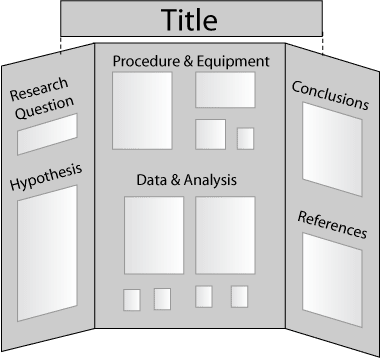
Beyond aesthetics, the structure of your board determines how successfully you communicate your scientific journey. A logical progression helps your audience follow your thinking, turning a static display into a coherent argument. Standard sections like the problem statement, literature review, methodology, results, and conclusion provide a familiar framework that judges appreciate. Observing the section placement in top science fair poster board examples can give you a blueprint for organizing your own information.
Your title and abstract are the gateway to your project, and they must be crafted with precision to capture attention. The title should be bold and descriptive, while the abstract provides a concise summary of your entire undertaking, highlighting the problem, approach, and key findings. Studying concise science fair poster board examples teaches you how to distill complex research into a few impactful sentences that compel the reader to look deeper. This initial hook is vital for ensuring that your hard work gets the attention it deserves.
The Abstract and Problem Statement
The abstract is essentially the trailer for your project, and it appears at the top of most science fair poster board examples because it needs to be seen first. It should summarize the entire project succinctly, including the question you sought to answer and the significance of your findings. A strong abstract allows a viewer to understand the core of your project even if they do not have time to read every detail. Looking at the tight wording of award-winning science fair poster board examples can help you learn to write with clarity and brevity.


Following the abstract, the problem statement should clearly define the gap in knowledge or the specific issue your project addresses. This section sets the stage for your hypothesis and provides context for your experiment. Effective science fair poster board examples often use bullet points or short paragraphs here to maintain readability. By clearly stating the problem, you transform your board from a simple report into a solution-oriented investigation that invites engagement.
Methodology and Results Presentation
The methodology section is where you prove that your experiment was conducted rigorously and ethically, and science fair poster board examples often display this using step-by-step lists or simple diagrams. You need to provide enough detail for someone else to replicate your experiment, but without getting lost in overly technical jargon. The best science fair poster board examples use a combination of text and flowcharts to make the process clear to both judges and peers. A clean presentation here builds credibility for the rest of your project.
Results are the exciting part of your board, and this is where your data visualization skills shine. In the best science fair poster board examples, results sections are dominated by large, clear graphs and tables that highlight trends and anomalies. Accompanying captions explain what the data means without giving away the entire interpretation, leaving room for your conclusion to tie everything together. Ensuring that your numbers are accurate and your visuals are error-free is a detail that always stands out to evaluators.
Conclusion and Future Applications
The conclusion section should answer the original question posed in your problem statement and determine whether your hypothesis was supported. Rather than simply restating your results, the strongest science fair poster board examples use this space to discuss the broader implications of the findings. You should explain what you learned and how this knowledge could be applied to solve other problems or improve existing methods. This forward-thinking approach shows judges that you are thinking like a real scientist.
Finally, do not overlook the importance of the references and acknowledgments sections, which lend authenticity and courtesy to your display. Citing your sources correctly, whether they are academic papers or online resources, is a matter of academic integrity and is a trait highlighted in meticulous science fair poster board examples. Acknowledging the help of teachers, family, or lab partners adds a human touch and demonstrates that your success was a collaborative effort. Taking the time to polish these details distinguishes a good project from a truly outstanding one.
As you prepare your display, remember that the most effective science fair poster board examples are not just about looking impressive; they are about clear communication and storytelling. Your board is a reflection of your critical thinking and hard work, so take the time to arrange your elements thoughtfully. Keep refining your layout and text until your message is as sharp and clear as your scientific findings. This process of refinement is what will turn your project from a simple assignment into a memorable experience for everyone who sees it.
Related Articles

150+ Science Poster Board Examples for Winning Projects
Creating an effective science poster board requires careful planning and a clear understanding of how to communicate complex ideas visually. Whether you are a...

Diorama Science Fair: Winning Projects and Display Tips
Exploring science through a diorama at the science fair turns abstract concepts into a tangible, walkable landscape that sparks curiosity in every visitor...
25+ Display Board Examples for Science Projects That Wow Judges
Choosing the right display board examples for science projects can feel overwhelming, but visual planning is the first step toward a winning presentation. A...

100+ Catchy Science Fair Theme Ideas for Winning Projects
Choosing a science fair theme is often the very first spark that determines whether a project will feel like a chore or a thrilling adventure, and getting this...
Tri Fold Poster Board Examples Creative Designs Templates
Tri fold poster board examples serve as a versatile foundation for creating eye catching displays that capture attention at any event. These physical visuals...

Interactive Hospital Model Ideas for School Projects Science Fair Blueprint
Transforming the traditional classroom into a dynamic learning environment is an exciting challenge for any school project. One innovative approach gaining...